Thursday, February 28, 2013

2/28/13

     Aelfric is saying that the medieval Estates are the working men, fighting men, and praying men. He says that in order for a kingdom to survive, they need all three types of Estates in their kingdom. You need the worker to work the fields and other jobs. You need the fighting men to fend off your enemies and to protect the kingdom. The praying men are needed for the battles on the spiritual side. Each of these Estates is crucial for the kingdom, but they shouldn't ever cross. According to Aelfric, a praying man should never try to be a fighting man or the working man, and the working or fighting man should never try to be a prayer man. At least that is what I got from the reading.
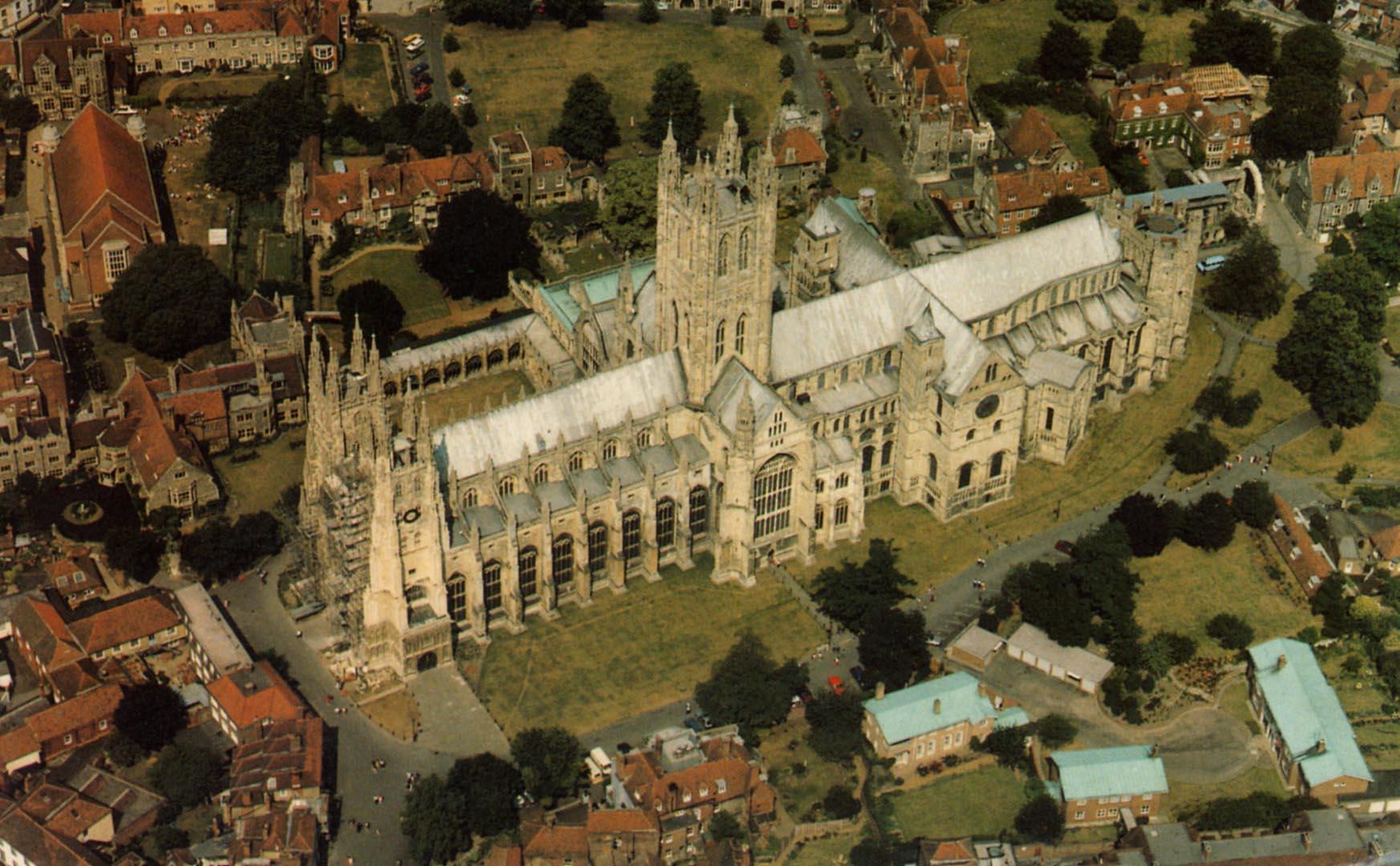
Canterbury Cathedral
http://ds0.cc.yamaguchi-u.ac.jp/~ht
/Canterbury%20Cathedral.JPG
     Chaucer mentions the Estates of men in his General Prologue. We have the praying men, which included the friar, nun, and a parson. We had the working men, which included the physician, lawyer, weaver, dyer, and carpenter. We also had the fighting men, which included the knight, squire, and yeoman. Now these weren't all that were mentioned, but just a few.
     Chaucer's frame tale is a tale of him and all of these different people traveling to and from Canterbury in which each person must tell two stories on the way there and two stories on the way back. Whichever person tells the best story gets a dinner paid for, or something like that, by the host. All of these tales in The Canterbury Tales are the stories that each of these people tell on the way to and from Canterbury.
Canterbury Cathedral
http://media-3.web.britannica.com
/eb-media/35/20335-004-E3FDE13E.jpg
     I believe that this is called the "Estates Satire" because it allows us to look at stories from each of these kinds of Estates. You have the fighting men Estate in which we will most likely hear a story told the way a fighter would tell it. Then you have stories told in the perspective of the prayers, and also of the laborers. It is a way to see the differences of the Estates. Thus is why I believe some call in the "Estates Satire."

Wednesday, February 20, 2013

2/21/13

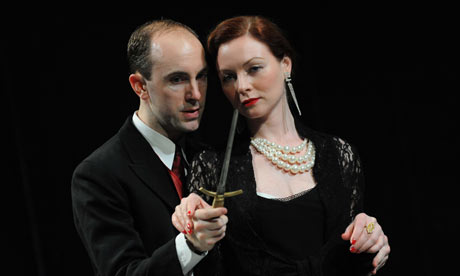
The Duchess
http://static.guim.co.uk/sys-images/Guardian
/Pix/pictures/2010/3/29/1269846980372
/The-Duchess-of-Malfi--001.jpg
     I would have to say that I do agree that it is similar to our modern theater of today's world. Most of our movies today are kind of like The Duchess of Malfi. They are filled with drama, like the play. One great example of drama in today's society is soap operas. These shows are nothing but drama, but they do entertain people. This play was like a soap opera, it was used for entertainment. One example of drama in this play is when Ferdinand busts into the Duchess' chamber. In this scene he seems to be yelling at her about  her having a husband and children. He tells her to kill herself. This takes place in Act 3, Scene 2, pages 38-40.
The Duchess
http://i.telegraph.co.uk/multimedia/archive
/02179/Duchess-of-M_2179908b.jpg
     Another example of the drama in The Duchess of Malfi is in Act 1 when the Duchess marries Antonio. It reminds me of another soap opera, however the name of the soap escapes me. The story was similar in which a man married a woman in secret, and they tried to keep it hidden. They failed just like the Duchess and Antonio. It ruined their image and in fact one of her old lovers tried to murder her husband which just added to the drama.
     The Duchess is a strong woman. She really hasn't done anything wrong, except she lied to her brothers. This shows her character. She is a great woman.

Tuesday, February 19, 2013

2/19/13


     First off, I want to state how difficult reading The Duchess of Malfi is compared to Twelfth Night. I don't exactly know why, but it is more difficult to understand than Twelfth Night. As we know, Twelfth Night was an Elizabethan play, but The Duchess of Malfi is a Jacobean play. These types of plays are similar since both have drama, but the main difference is who was ruling when the play came out(http://www.gcseessays.com/essays643249.htm). An Elizabethan play premiered during Queen Elizabeth I's reign, while the Jacobean plays premiered during King James I's reign. The plays usually have something to do with the politics of the day or the ruling family. It seemed many of the plays during the elizabethan play reign were happier plays than the jacobean play reign.

John Webster
http://www.johnwebster.galeon.com/images/morse11.jpg

     The Duchess of Malfi is a great way help show the meaning behind Sir Thomas Wyatt's two poems. When Antonio and the Duchess marry, they keep it secret otherwise his life would be in danger. It seemed like Bosola is sneaking around in order to get dirt on someone in order to further his own status. It seems as if in order to stay in court, you can trust no one. Even Antonio found it hard to trust Delio with the news of his marriage. It would seem like in the courts of old, that one had to only focus on their own lives and had to try to discredit others.
     When Ferdinand found out about the Duchess having a child, he was angry. He even stated that he wanted to kill the person responsible. This shows just how the power in a court can work. All it would take is for him to say kill this person and guess what would happen. That person would die. This shows that in order to survive in court, one must stay on the good side of the people ranked above them.

Wednesday, February 13, 2013

2/14/13

     Before I begin to talk about the topics for this post, I wanna talk about the play. I must say that when I began to read Twelfth Night, I really had my doubts on whether I would like it. I was completely wrong. It is true that the wordplay was hard at first, but I really did enjoy it. I thought it would just be a boring story, but I was wrong. This play was really good, and I know that I will read it again in the future.
     My reaction to the end of the play would confuse me. This is mainly because the actors are all men. It would take me a while to get used to seeing a man play a woman. Especially the character of Viola, or Cesario. I mean it would be a man playing a woman playing a man. It would be confusing especially knowing what character he was speaking through. The ending would be difficult because I now must see the actor as a woman again since most of the play he was a woman playing a man. My reaction in today's world would be a lot less confusing. The woman would be played by a woman and it would be easier to see the woman as the woman again at the end.
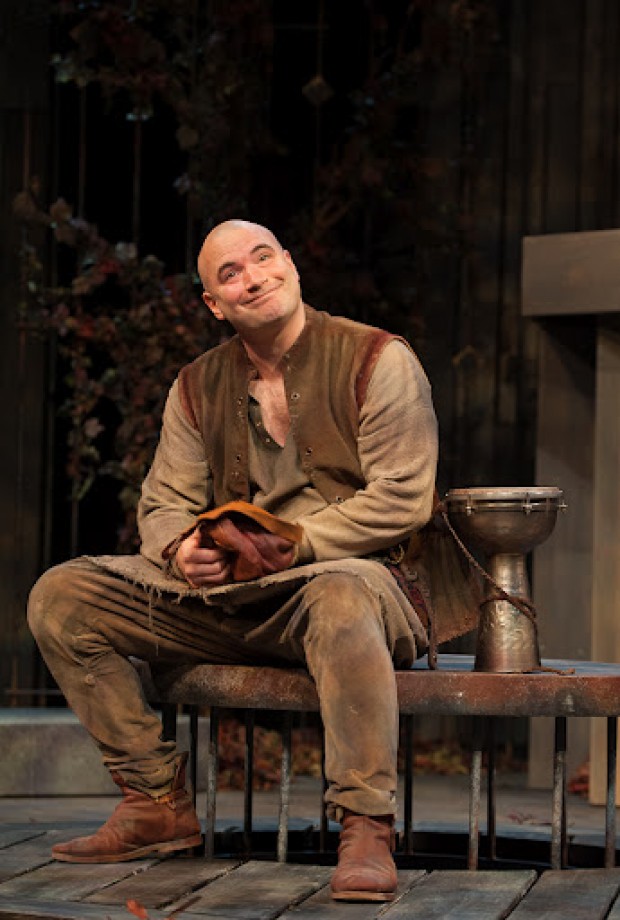
Feste the Fool
http://bloximages.chicago2.vip.town
news.com/host.madison.com
/content/tncms/assets/v3/editorial/0/18/018

d2d58-b968-11e1-9eca-001a4bcf887a/4fdf6080
e236e.preview-620.jpg
    Now the matter of Feste the Fool. I must say when we first heard of him in the beginning of the play, I believed that he was just a fool, but he is really much more than that. In fact, I believe he always knew that Cesario wasn't as he seemed. "This fellow is wise enough to play the Fool,"(Twelfth Night Act 3, Scene 1, Line 61, Viola). It may not be that, but I feel as if he may have realized that something was "off" about Cesario. Another instance of the wisdom of this fool is when he and Orsino are talking. He actually plays off of Orsino's good nature to give him more money, not many fools would do this. Another instance is when he is talking to Cesario and says, "I am indeed not her Fool but her corrupter of words."(Twelfth Night Act 3, Scene 1, Lines 36-37). Throughout the play the other characters are completely outsmarted by the Fool, this in my opinion proves that he is actually very bright and a lot more than just a fool.

Monday, February 11, 2013

2/12/13

     In the time of Shakespeare, the gender roles were established in which a man as over the woman. A woman's role was mostly that of a house woman. They didn't have any power except if their father or husband had died and they had no other relatives. In Twelfth Night Viola in Act 1 is saved from a ship and has to dress like a man in order to find work in Orsino's court. She wouldn't have been able to work for Orsino unless she dressed like a man. Most of all in this time was that men were believed to be superior to women.
Malvolio
http://www.lasplash.com/uploads//3
/Twelfth_Night_Review-4.jpg
     The appearance of the characters is somewhat hard for me to describe except for Malvolio in one scene because they actually describe what he is wearing. We know that the clothes that he is wearing in this scene makes others believe he is crazy, although most of the people who talk about it planned it. The people of this day made appearance everything, at least those who were the upper class. I believe that Orsino is a well-dressed man since he is a lord. Most of the people in the play are well-dressed for their day, but our look at their dress today would make most of us laugh. If you think about it, appearance for our upper class is still viewed the same. They still put a lot into appearance.
     This play is a love story that has gotten mixed up. All the characters seem to be falling in love with other characters. It is a love story like The Magic Flute, but not the same type of love story. It is hard to believe some of the story considering how fast the characters fall in love, but that is our willingness of belief. Shakespeare wants us to believe that the characters are in love. Even though it is hard for us to believe we must have the willingness to believe it.
     I must say that I have enjoyed the play's first three acts. The wonderful story about how Viola must dress up as a man and try to seduce a woman for a man that she loves, in which the woman she is sent to seduce falls in love with her. I love the drama in the play.

Wednesday, February 6, 2013

2-07-13

http://yearinreading.files.wordpress.com/2011/04/shakes-twelfth-night.jpg
     We are about to begin reading Shakespeare's Twelfth Night. Shakespeare is a great play writer. In Shakespeare's texts he didn't include a lot of stage directions, but yet the actors and directors were still able to act of the scenes. They did this by reading the text, and then adapting the scene to what they believed would be happening. This is why no two Shakespeare plays are the exact same.
     Shakespeare was well educated for his time. He is believed to have attended the King's New School. This school was in Stratford. The school was one of the grammer schools of the time. He left the school to go to London to be part of the theatrical world, but according to the Folger Shakespeare Library it is unknown as to why or when he left to go to London.
William Shakespeare
http://www.biography.com/imported/images/Biography/
Images/Profiles/S/William-Shakespeare-194895-1-402.jpg
     Shakespeare's plays first came around before stage lighting came around. In his time, they used "universal lighting" or the light from the sun. The light they used was the light of the sun because they did not have the lights that we have today. If they had to act as if it was night, it was told through the text or characters. The plays were popular enough that even the commoners were able to attend them. The commoners were allowed to pay a lower price, but had to stand. They were called "groundlings" because they had to stand on the ground in the theater.
     At the beginning of Shakespeare's time, women were unable to be in the plays. If there was a woman in the play, the part was played by a man. In Twelfth Night, there would have been no females playing the female roles. Later on, women were finally allowed to be part of the plays. According to the Folger Shakespeare Library, Shakespeare is buried in Stratford in the chancel of the Holy Trinity Church.

Monday, February 4, 2013

2/05/13

http://teachers.saschina.org/dbister/files/2012/05/Renaissance.jpg
     The Renaissance was another great time period(around 1450-1600) of the early modern world. One of the topics I will discuss is what Castiglione means by the word sprezzatura in The Courtier. According the Castiglione,
     "To do his feates with a slight, as though they were rather naturally in him, than learned with studye: and use a Reckelesness [sprezzatura] to cover art, without minding greatly what he hath in hand, to a mans seeminge."
     At first when I looked at this, I had no clue of what to think about it. It seemed like a bunch of words that were misspelled and just completely thrown together all wrong, but really look at the sentence. It gives you the definition that he was trying to get across. I believe that he makes the word sprezzatura mean that the courtiers must be without many flaws. The must not be too proud. They must not be a quick talker or someone who doesn't know how to hold their tongue. Many men who have loose tongues are reckless, which is the main definitions that he has given.
Bill Gates
http://www.microsoft.com/global/en-us/news/
PublishingImages/bod/billg/gates_print.jpg
     From The Courtier we get a clear look at what they called a "Renaissance man." In my opinion, a "Renaissance man" is a man or woman who is very active in the society, has much knowledge, and has many different skills. I believe that an example of a "Renaissance man" in our time is a man who has helped to make America what it is today, without his contributions the world would be different. This man is Bill Gates. I believe that he is the best candidate for being a "Renaissance man" because of the achievements that he has helped the world achieve. One of the founders of the internet, he has helped program computers and technology into everyone's home and workplace. He is very knowledgeable and I have never heard of him doing anything reckless. This is why I believe he is the best candidate.
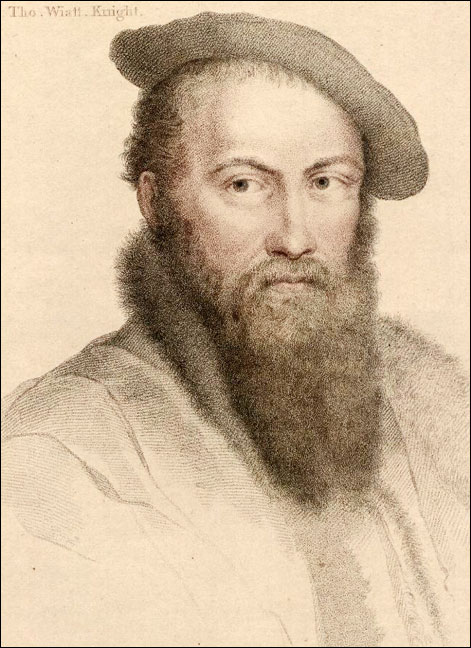
                        Sir Thomas Wyatt              
http://www.luminarium.org/renlit/wyattholbein.jpg
     The second part of this post will be about Sir Thomas Wyatt's two poems. I believe that his poems are both talking about the court of Henry VIII and about the queen, Anne Boleyn. The first poem, Whoso List to Hunt, I Know where is an Hind, talks about his love for her.  How he will never be able to have her because she was the wife of his king, Henry VIII. The second poem, Who list his Wealth and Ease Retain, is talking about how he is in prison watching his love, Boleyn, being put to death by her husband for adultery with, assuming, Wyatt.
     We learn that life in the king's court is a hard life, because one must watch what is said because the king could have you killed for anything. The literal meaning of Noli me tangere means not to touch. In my opinion, he is saying what she probably told him. She was the king's wife and therefore couldn't have relations with Wyatt. In the second poem, he says the line Circa regna tonat over and over. The literal meaning is "it sounds through the realm"(http://sutros.com/songs/15090). I believe that it means something about him hearing the sounds of her execution while in the prison. He cannot escape the sound of her death and it haunts him.