Tuesday, April 30, 2013

4/30/13 Final


Humanity has changed in great ways during the past three thousand years. Their society has grown so much. I have witnessed their society grow so much during the years I have observed them. After watching humanity, I believe I have figured out the greatest question that all humans have pondered. I believe I have figured out what it means to be human.
Human
Humans are simple beasts who like other beasts crave to be accepted by their own kind. They do not live full lives unless they have interaction with other humans. In fact one of their own kind states that friendship is a necessity for humans. This human was Aristotle. However, there are different types of friendships for humans. In Nichomachean Ethics, Aristotle mentions what he believes to be the three types of human friendships. He classifies them as “Friendship based on utility,” “Friendship based on pleasure,” and “Perfect friendship is based on goodness” (Coursepack,75). I greatly believe that Aristotle was on to something when he stated this. From my findings on humans, I have witnessed many of these types of friendships. The utilities gained from some of the friendships can be small or big things. Some examples include having the friend give you a ride, having the friend help them on work, and even just having the friend visit so they can have someone to talk to. Many of these friendships only last until the need has been filled. I noticed that small children and older humans usually use this type of friendship. The pleasure aspect is mostly used by young humans who are not yet adult humans. Many of them have friends who are only friends with them as long as they bring them some type of pleasure. The pleasure can be any type of pleasure. The goodness factor according to Aristotle is the perfect friendship. I must say that I agree with him. The perfect friendships are between humans who have nothing to gain from being friends, and yet still remain friends. They focus on just being with each other. I completely agree that humans require friendships in order to fully experience the human life.
Achilles
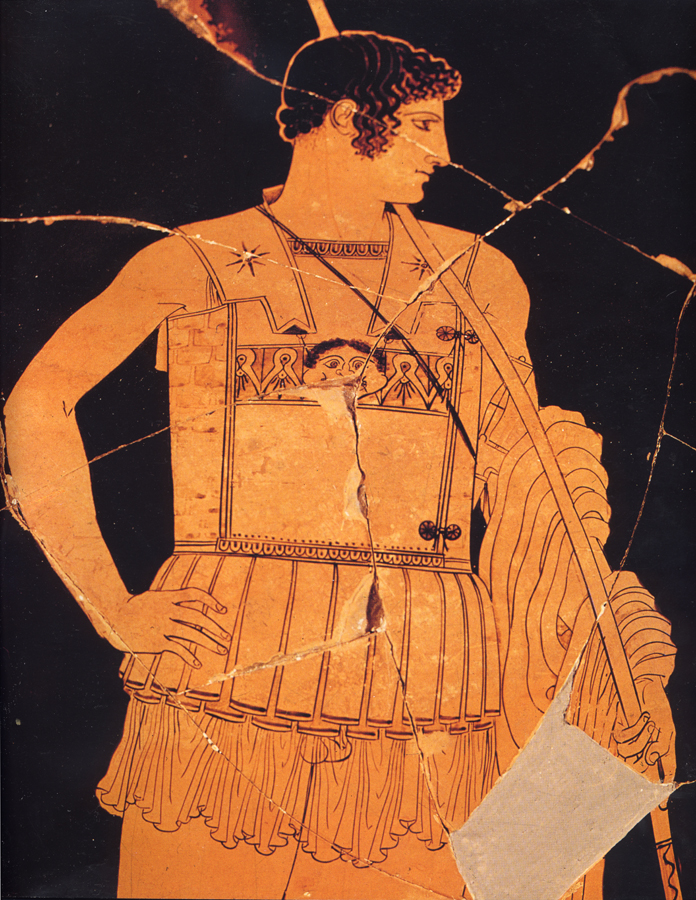
Humans have had literature like Aristotle’s literature that will use Aristotle’s work to help describe humanity. Their society has changed, but in my own opinion their society still focuses on what other humans think of them. Homer’s Illiad shows what their society was all about in the Ancient time. It was a society based on shame. Now it is true that their society has changed more into a society of guilt, but they still focus greatly on what other humans think of them. From Homer’s Illiad, Achilles has a choice. He can live but not be remembered or die and people will remember his name forever. Do you know what he chose? Due to their society being a society of shame, he chose to die just so he would always be remembered. To our society this may seem backwards, but to their society at the time he chose the correct answer. Humans base their own image on what other humans think of them. The humans have grown out of this, but they still worry about what other people think of them. I doubt any human alive today would choose the same answer that Achilles chose, but they still want other humans to think well of them.
Chain of Being
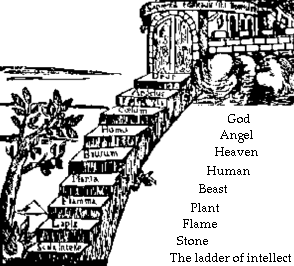
Humans have gone through many different periods in their societies. One of the greatest periods in my opinion is the period that humans call the Enlightenment period. In fact without the complex human thought of this period perhaps one of the greatest nations of humanity wouldn’t exist today. During the Enlightenment, humans’ way of thinking changed. One human even wrote an essay on humans that he titled, Essay on Man (Pope, Coursepack, 17-23). This human’s name was Alexander Pope. In Essay on Man, he describes a chain of being, which when I read it I believed he would make man the top of the chain. However, I was wrong as I continued to read his work; I noticed that he didn’t put humans at the top of the chain. He put them in the middle of the chain. Pope continues on talking about how man has his place and he can neither go above or below his place. “Aspiring to be gods, angels fell, Aspiring to be angels, men rebel” (Essay on Man, Coursepack, 18). This quote from Pope’s work shows that he truly believes that everything has its place on the chain and that no one can change it. I must say, I agree with what Pope calls, “The Chain of Being.” This thought like many others came from the Enlightenment period of humanity.
I have talked about humanity’s past, but now I will tell of humans from the present, or the Modern era of humanity. One thing I noticed greatly with humans is never judge a book by its cover and never judge a book by what is written on the page. Many humans from the past wrote many wonderful things, however only now are humans really discovering what they believe the writings to be truly about. One of the greatest poems in modern times for humans to learn how to read poetry is Billy Collin’s Introduction to Poetry (Coursepack, 6). In his poem, he tells humans by using images and symbolic meanings how they should read a poem. In my opinion this can work for any kind of literature. He tells humans not to just think of the words on the page, but to really try to see what is behind the words. The things behind the words can be images, symbols, or the human author’s true intentions. Many past human authors may have had other intentions for their writings rather than what many believe.
Did I mention earlier about how humans will use what other humans used over and over. One great example of this is the song by Kelly Clarkson, a music artist of modern day humanity. Her song, What Doesn’t Kill You Makes You Stronger (Coursepack 13), was a new way to think about what another human had already stated. Friedrich Nietzsche originally had this idea. His quote is “That which does not kill us makes us stronger” (psychologytoday.com). This is a perfect example of how humans will use what others have used.
Humanity is a great civilization. They may have their shortcomings, but they will thrive. They must have social interactions with other humans. It amazes me of how much they have opened their minds over these three thousand years. They are beginning to understand what their past has to teach them. All in all, in order to be human one must be with humans and learn from humans, and before long that person will be a human.

Wednesday, April 17, 2013

4/18/13

Tragedy
     Aristotle believes that tragedy is an action that is serious, complete, and has magnitude. Tragedy to Aristotle is not a narrative which some may view it as now days. Aristotle believes a tragedy must have six parts to make it a tragedy. These parts are plot, characters, diction, thought, spectacle, and melody. Aristotle believed that tragedy is more philosophical than history. History only relates what happened. Tragedy shows what may happen. Tragedy is universal and causes a cause and effect chain that shows what could happen.
Greek Theater
     According to Aristotle, hamartia does not mean a tragic flaw. It means more of a tragic mistake or situation rather than flaw. This is like Orestes, he doesn't have a flaw, but he is in a tragic situation. Almost all protagonists in a tragedy go through hamartia. They are not flawed, but just put in bad situations or make mistakes.
    According to Aristotle, katharsis means purging. He uses it more as a medical metaphor. It has emotions raise of pity and fear to purge the excess of those emotions. He also talks about how people can get pleasure  from a tragedy. The pleasure is gained by the people responding to their fear and pity.
Greek Theater
    Deus ex machina was used as a plot device for most tragedies in those days. It was an "episodic" plot in which the plot was in the form of episodes that came right after the other without a necessary sequence. Aristotle believed this was the worst type of plot for tragedies. He didn't like it at all.

Tuesday, April 16, 2013

4/16/13

Priam
Achilles
     Xanthus is Achilles horse. Hera gives the horse the ability to speak to Achilles. He tells Achilles that he will die. Achilles then says that he knows already because he can feel as if death is around him. After this, Achilles mentor and friend Patroclus appears to Achilles to tell him he needs to bury, or burn, him quickly otherwise he cannot enter Hades. In this culture, a person cannot pass into the underworld unless they are buried or burned otherwise they stay in a state of limbo.
Achilles and Priam
Death of Hector
     The golden scales represents the lives of men. Fate then decides who lives and dies. In this case the scales show that Hector is going to die by the hand of Achilles. Even the gods have no control when it comes to fate. Fate is more powerful tan the gods because Zeus wants to interfere, but fate has already claimed the life of Hector. Athena reminds Zeus of Hector's fate which makes him not interfere.


Thursday, April 11, 2013

4/11/13

     I must say the Iliad isn't as hard to understand as I thought it would be. As stated in the course pack, the Iliad takes place in medias res, which means in the middle of things. Medias res is the time period in which the story of the Iliad takes place. According to Homer, the Iliad is about, "the story of raging anger and its human toll." It is about Achilles rage. It is not about the Trojan War, but the war is what holds Homer's work together.
Chris Evans: Achilles
     Achilles is a Greek king who is one of the Greeks greatest warriors. He is angered by what he believes is a lack of respect from Agamemnon. He feels that they are only fighting because Agamemnon commands them to. He also feels cheated by people like Agamemnon who take a great share of the spoils for which Achilles and others have fought to obtain. Achilles believes Agamemnon to be selfish and stupid. He believes Agamemnon has not treated him with the proper respect that he feels he deserves.
     Briseis is a woman who Agamemnon gave to Achilles as a prize. I am unsure if they were married, but I believe they were. Anyway after Achilles decided not to fight in the war, Agamemnon takes her away from him. This troubles both of them since they seemed to really love each other.
     Kleos means glory or fame. It is what others say about you. This was a major issue then and it still is used greatly in our society today because we want everyone to say good things about us. We base our popularity on what others think of us.
     Time represents honor. Their honor is based on physical things like gifts, prizes, etc. When a man was honored back then, the king or people would give them honor by offering them gifts. I believe we still use this today. We honor people in the military by offering them deals for food. Some places give a discount to honor those who served. The discount can be viewed as a gift.
Achilles and Patroclus
     Kleos aphthiton represents glory that goes beyond the grave. In there time, this was the greatest thing to have people honor you after you had died. Many soldiers were honored in death due to them dying for their kings. In our world, this a greatly shown through the founding fathers. They may be dead but we still honor them. Martin Luthor King Jr. is honored in death by us celebrating his birthday every year. It is us thinking about all the good they have done in life so we honor them by remembering them in their deaths.
     I believe the relationship between Achilles and Patroclus from reading was a teacher-student relationship that grew into a kind of friendship. "He sent me to you to you this" is the line that convinced me that Patroclus was his mentor(Iliad Book 9, page 172, line 454). Achilles refuses to fight and Patroclus takes his armor to wear into battle. This in my opinion diminishes the divine nature of Achilles' armor since Patroclus in a normal man. This shows that Achilles divine nature has fallen as well since his armor was taken and stripped from the dead body of Patroclus. It showed that he wasn't as powerful as he thought he was.

Tuesday, April 2, 2013

4/4/13

     In order for the Greek army to sail to Troy, they had to do something which in today's society would be completely wrong. They had to sacrifice someone in order to sail to Troy. They had to sacrifice Agamemnon's daughter, Iphigenia. Agamemnon had done one of the following which upset Diana. He killed one of her stags or made a careless boast. Either way, this upset Diana, who made the sea unable to travel on. I believe this is awful. I wouldn't feel very safe if it took human sacrifice to please a god. Even human sacrifice is mentioned in the Bible in Genesis, not sure exactly where. Abraham is asked by God to sacrifice his one and only son, but God only told him this as a test to test Abraham's faith in him. Abraham never sacrificed his son because God stopped him. I am a christian, but if God required human sacrifice I probably wouldn't be. Anyway, I would hate to serve a god who required this.
Emma Stone
     I believe a good female actress for the part of Helen would be Emma Stone. Emma is a beautiful girl, but also smart and witty. Helen was said to be the most beautiful woman in the world at this time, so I believe Emma fits that role. I also think that Helen was probably smart and witty. I mean she left her husband and took some of his wealth with her. She had to be smart to pull that off in this time.
Palladium
    The Palladium was a statue of Athena, goddess of wisdom. I'm not really sure why they had to steal it, but my guess would be that it would disgrace Athena if her statue was in Troy when it fell. It could have symbolized her protection over the city.
Trojan Horse
    The Trojan Horse is probably one of the greatest tricks in all of history. It took the Trojans completely by surprise. The idea for the Trojan Horse came from Odysseus. Some may say that Athena helped him with the idea, but I don't really believe in the Greek gods so I think it was all him.

Monday, April 1, 2013

4/2/13

     I must say compared to the first reading, this was not as hard to digest. Aristotle is talking about friendship and how he views it. He states that there are three types of friendships. Friendship based on utility, pleasure, and goodness.
     The first type is friendship with a basis in utility. This means that the friendship is only there while your getting something you need. The friend is useful to you. An example of this was when I was a freshman in high school. There was a student who could drive. I wasn't able to yet, but I tried to become friends with the student just so they would let me ride to school with them. Soon after I was able to drive our friendship disappeared. This shows the problem with this type of friendship. It doesn't last long after their usefulness has run out.
Delta Farce
     The second is based on pleasure. This means that the friendship is based off of getting pleasure for yourself. You are only friends as long as they give you some sort of pleasure. An example of this is ex-girlfriends. They are a friend while they bring pleasure to you, but whenever the pleasure stops on most occasions the friendship does too.
     The third is based on goodness. Aristotle believes this to be the only true friendship. You are not in it for the pleasure, nor for their usefulness. They are a friend just because. I really don't know how to state it. They don't care about making themselves happy, but they wanna try to make you happy. When both people think this way, the friendship builds and can last forever.
     The movie Delta Farce in my opinion shows some of all three types of friendship. The first is shown when the town allows them to stay. They only do this because the men have become useful to the town in helping prevent Carlos Santana's gang from wrecking it. The second is when the town is throwing the men a party because the men really don't care about the town, but they are enjoying the pleasure that the town in giving them. The third is shown after the men save their Sargent. They return to the town and choose to stay and fight even though their is no pleasure or usefulness to gain from it. They choose to stay for the good of the people in the town.
Larry the Cable Guy, DJ Qualls, & Bill Engvall
     I believe Randy Travis is speaking about the third type. He is talking about being with the same woman forever. I haven't really heard about only being with her until her usefulness wares out or the pleasure is gone in the song. I strongly believe that he is talking about the fact that he will continue to be friends or in love with her forever, and it doesn't matter what happens. He will always love her, which shows the third type of friendship in my opinion.

Thursday, March 28, 2013

3/28/13

Aristotle
     I must say that this was hard to understand while reading. I believe he means that happiness is not just a state of mind, but a person is only happy when they are doing positive things to make them happy. I myself don't agree with him, I believe happiness is a state of mind. I believe you can do good activities and still not be happy. You mus have happiness in a state of mind in order for you to be truly happy. Here is what he believes is the happy man,
Telescope
     "For no function of man has so much permanence as virtuous activities (these are thought to be more durable even than knowledge of the sciences), and of these themselves the most valuable are more durable because those who are happy spend their life most readily and most continuously in these; for this seems to be the reason why we do not forget them."
     I believe the happy man is a person who is happy not matter his situation, someone who loves and enjoys life. I believe Sheryl's song is and Aristotelian because it seems like no matter what happens, the person will be happy.

Monday, March 25, 2013

3/26/13

Joseph
http://image.guardian.co.uk/sys-images
/Guardian/Pix/pictures/2008/07/07/joseph460.jpg

     Joseph is considered an epic hero due to his wisdom and faith in God. Without these two things, he would not have been able to save his father’s people and all of Egypt from the seven years of drought.  If he hadn’t have been faithful to God, God wouldn’t have used him to provide the wisdom in order to save Egypt. Joseph, however, was blessed with the wisdom to interpret dreams by God already. The bad thing was that his brothers sold him due to jealousy, but he still stayed faithful to God and God blessed them. Even when he is tempted by Potiphar’s wife he remains faithful to God. When he is thrown in jail, he may be at a low point, but he still keeps his faith in God. Finally, when he is brought to Pharaoh due to his remaining faith he is blessed by God, who makes is possible for him to save Egypt.
     I don’t think this is the first time she has done this. I always wondered what happened to his other servant who ran the house before. I believe she did the same with him, but he actually went with it. I believe that if he had fallen to her, he would have been killed or God would have taken his gift away. All the lives of Egypt and his father’s people are saved due to his choices and actions.
     I believe that God helped Joseph become a trusting person, but his choices and fear of God are what shape him into the man he becomes. Yes, I believe God helped him become the trusting man he was. He uses his gifts very wisely at the end, but not at first. A politician nowadays would use it unwisely like he did and first and end up getting in trouble. I mean he was basically seeing the future through the dreams so if a politician saw that he would probably try to change it or brag about it.  

Wednesday, March 13, 2013

3/14/13

Van Helsing Werewolf
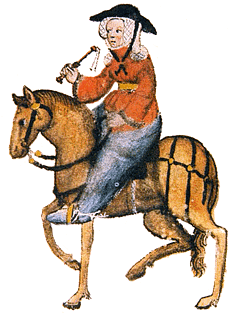
Medieval Man
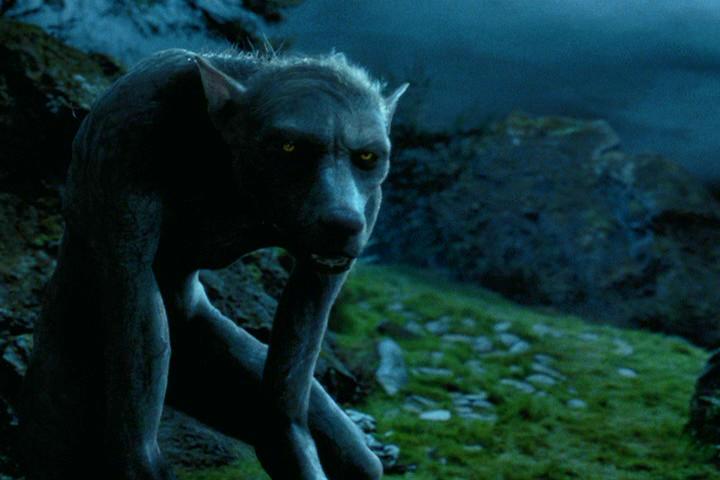
     A Breton lay is a fairy tale of the Medieval times. Much like our fair tales today, they had to do with witches, demons, fairies, etc. This particular fairy tale is about a werewolf, which is still an iconic creature in many fairy tales and monster movies of today. The author, Marie de France, was a woman, which wasn't a common occurrence of the day since women were treated as property rather than people. Women were in no way equal to men in Medieval times. According to the introductory material, the clothes don't always make the man. In the world of beasts, man is the only beast that covers up their nakedness with clothes, which is why whenever he becomes a man again, he has to have his clothes. I myself am not too familiar with the Harry Potter series, but I believe that it shows the importance of clothes just like this story whenever two of the characters transform into a werewolf and a grim, a dog-like creature. When they are the beasts, they are naked, but whenever they are the men they are clothed.  It shows the difference between a beast and a man.
Harry Potter Grim
     What is beast? What is human? Both of these questions are shown greatly in this Breton lay. We have a man who turns into a beast, betrayed by his wife, and taken in by the king. We have a knight who along with the wife prevent the man from becoming human again. This question really comes down to what aspects of man make a man man. From the good side of man, the beast of our story is more of a human being, but from the bad side of man,  the wife and knight are more human. Both good and bad qualities make up a man, so it is hard to say which one shows humankind more. Although if I must choose, I think man is ultimately good so in this case the werewolf is more of a man than the knight and wife. He is open and honest. An example is when he finally tells his wife the truth and even when he is before the king he attacks the knight and wife.The other two are deceitful. An example of this is when she finally gets him to tell her and then decides to betray him by stealing the clothes. This is why i would view the beast as more human than the other two.
Harry Potter Werewolf
Bisclavret
     I believe the significance of her nose is to show just how ugly she really was on the inside. As humans, noses can make you beautiful or ugly, which explains why people nowadays have plastic surgery to fix certain parts of their bodies like their nose. It was a sign of beauty. Since she no longer had her nose, it showed her as ugly. This is what I though about it.
     I must say that reading this story reminded me greatly of Samson and Delilah. In the Biblical story, Delilah does just what his wife did to him in Bisclavret. She nags him until he finally tells her his secret and the details of it. I must say, I believe Marie de France must have read the story of Samson when she wrote this because both stories are really similar. All in all I enjoyed reading this fairy tale. As you can tell from the pictures, I like werewolves.

Wednesday, March 6, 2013

3/7/13

     I believe she changes the story in order to make men not look as good and honorable as they did in The Wedding of Sir Gawain and Dame Ragnell. In the original, the king is the one that must find the answer in order to be spared by another knight, who wants to kill him because one of his knights has ruined his life. In The Wife of Bath's Tale, a knight is on trial for raping a woman in the kingdom, and he must find the answer for the queen instead of the king. I believe she puts the queen in charge as a sign of women's sovereignty. She makes the knight's crime rape, which shows more sensitivity to women.
Chaucer
http://www.biography.com/imported/images/Biography
/Images/Profiles/C/Geoffrey-Chaucer-9245691-1-402.jpg
     In The Wife of Bath's Tale, the woman has "pillow talk" with the knight in which she wants to know why he is so gloom. He tells her that her ugliness and lack of nobility is upsetting to him, since in this time it was more of a "who your daddy was" that defined you. She comes out and tells him that true gentility isn't about that, but really about how you live. It is who you are, not who your dad is. I believe this matters to the Wife of Bath because to her many may look down on her since she has been married so much. I also believe it is because she wants people to remember her for her, not for who are dad or husbands were.
     First off, I wanna say that I really didn't understand the retraction. I searched the web, but couldn't find an answer that I saw fit, but I went back and read it again and this is what I came up with. I believe he is saying that things we read or see in life may not always be things we like, but we really cannot control them. Chaucer was just telling us that he didn't mean to offend anyone with his writings. I do not think he is taking anything back. I believe he is just saying sorry if it offended someone, because he didn't mean to offend them.
     I believe that Chaucer didn't really like the Roman Catholic Church. His characters like the friar, nun, and other religious figures are all in some form corrupt like the Cardinal from The Duchess of Malfi (John Webster). He may have been pressured by the church to write the retraction, in which case he apologized for the stories about the corrupt church leaders. However, he really never took anything back, he just told people that there are things that are good and some that are not. Either way he still proved his point.

Tuesday, March 5, 2013

3/5/13

     First, I must say that I really don't like her character from the reading. To me, she sounds like a gold digger and a "insert bad word here". She uses sex to control her first three husbands. The fourth one could control himself. She also married them for their money, gold digger. The last one she married for love so he was a different case.
Wife of Bath (http://www.luminarium.org/medlit/wife.gif)
     When she begins to speak about marriage and laws of marriage she decides that the Medieval Church is wrong on its view of marriage. She uses the Old Testament as a way to help prove her point on their first fallacy. She uses Solomon as her main example of this. Solomon was the wisest king in history according to the bible, besides Jesus. Yet, he had more wives than any other man in history. She uses him as an example against the church saying that one should only be married once. 
     The second fallacy that I noticed that she uses is when God told man and the animals to be fruitful and multiply. She takes this to an extreme in my opinion. She thinks it as if man is like a beast and should be able to multiply with as many partners as they see fit. Only those who are to be perfect like Jesus should not be allowed to do this.
     I believe that she would really like the song, Maneater by Daryl Hall and John Oates. This song in my opinion describes her completely. The woman goes through man after man taking what they have and is not effected by the men at all, just like she did with her first four husbands. They may have even written this song after reading her prologue, just kidding. The song just describes how the maneater is watching her prey and learning how to manipulate the man, like she used sex to manipulate her first three husbands. I believe that she would like the song simply because it is about herself. In my opinion she seems very stuck on herself.
      Maneater http://www.youtube.com/watch?v=yRYFKcMa_Ek

She'll only come out at night
The lean and hungry type
Nothing is new, I've seen her here before
Watching and waiting
Ooh, she's sittin' with you but her eyes are on the door
So many have paid to see
What you think you're gettin' for free
The woman is wild, a she-cat tamed by the purr of a Jaguar
Money's the matter
If you're in it for love, you ain't gonna get too far
(Oh-oh, here she comes) Watch out boy she'll chew you up
(Oh-oh, here she comes) She's a maneater
(Oh-oh, here she comes) Watch out boy she'll chew you up
(Oh-oh, here she comes) She's a maneater
I wouldn't if I were you
I know what she can do
She's deadly man, she could really rip your world apart
Mind over matter
Ooh, the beauty is there but a beast is in the heart
(Oh-oh, here she comes) Watch out boy she'll chew you up
(Oh-oh, here she comes) She's a maneater
(Oh-oh, here she comes) Watch out boy she'll chew you up

(Oh-oh, here she comes) She's a maneater
------ saxophone ------
Ooh,
(Oh-oh, here she comes) Here she comes, Watch out boy she'll chew you
up
(Whoa-oh, here she comes. Watch out) She's a maneater
(Oh-oh, here she comes. She's a maneater) Ooh, she'll chew you up
(Oh-oh, here she comes) Here she comes, she's a maneater
(Oh-oh, here she comes. Watch out) She'll only come out at night, ooh
(Oh-oh, here she comes) Here she comes, she's a maneater
(Oh-oh, here she comes. She's a maneater) The woman is wild, woo
(Oh-oh, here she comes) Here she comes. Watch out boy, watch out boy
(Oh-oh, here she comes) Oh, watch out, watch out, watch out, watch
out
(Oh-oh, here she comes) Yeah, yeah, she's a maneater
(Oh-oh, here she comes. She's a maneater) She's watching and waiting,
ooh
(Oh-oh, here she comes) Oh, she's a maneater

Lyrics from <a href="http://www.elyrics.net">eLyrics.net</a>
 

Thursday, February 28, 2013

2/28/13

     Aelfric is saying that the medieval Estates are the working men, fighting men, and praying men. He says that in order for a kingdom to survive, they need all three types of Estates in their kingdom. You need the worker to work the fields and other jobs. You need the fighting men to fend off your enemies and to protect the kingdom. The praying men are needed for the battles on the spiritual side. Each of these Estates is crucial for the kingdom, but they shouldn't ever cross. According to Aelfric, a praying man should never try to be a fighting man or the working man, and the working or fighting man should never try to be a prayer man. At least that is what I got from the reading.
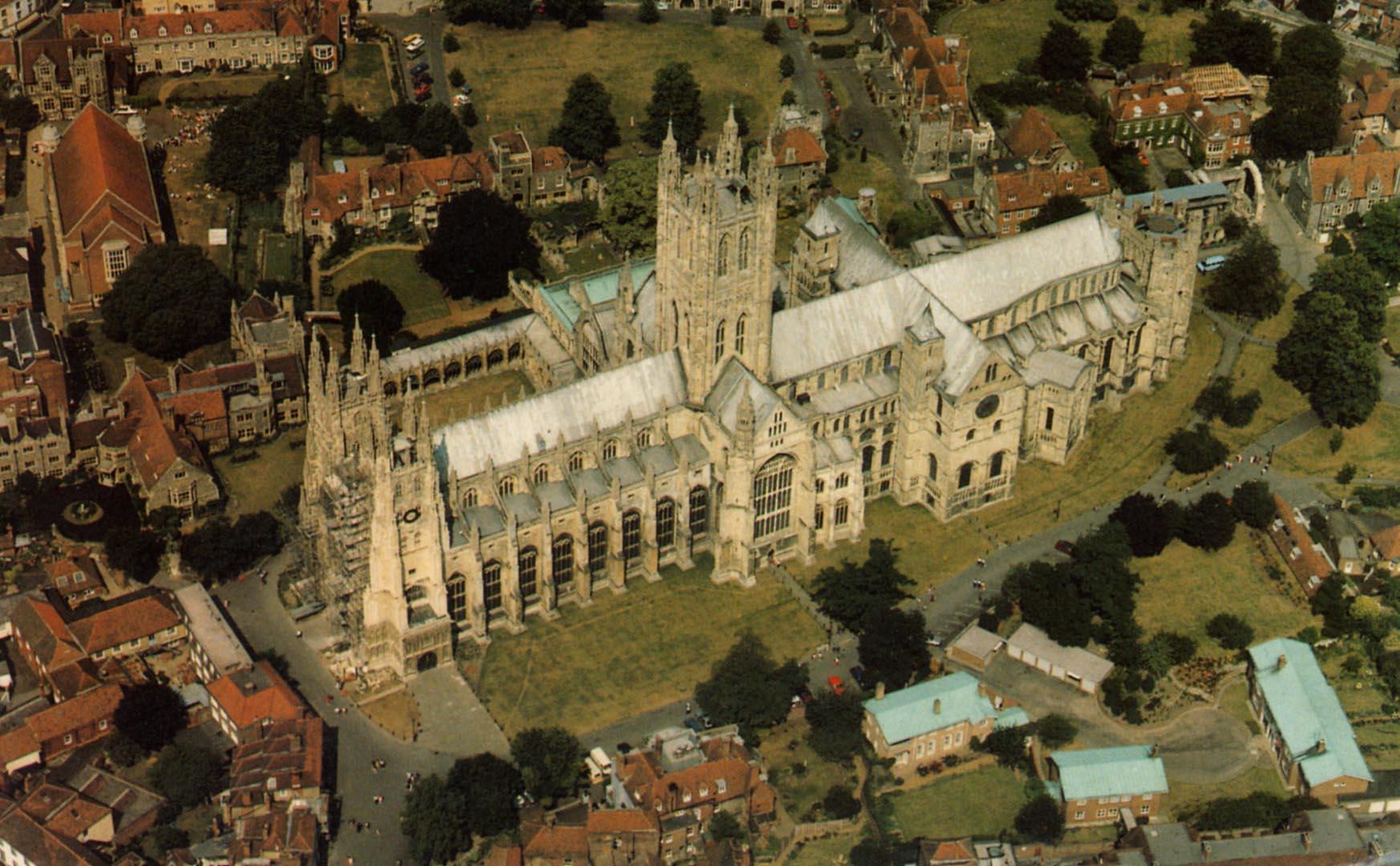
Canterbury Cathedral
http://ds0.cc.yamaguchi-u.ac.jp/~ht
/Canterbury%20Cathedral.JPG
     Chaucer mentions the Estates of men in his General Prologue. We have the praying men, which included the friar, nun, and a parson. We had the working men, which included the physician, lawyer, weaver, dyer, and carpenter. We also had the fighting men, which included the knight, squire, and yeoman. Now these weren't all that were mentioned, but just a few.
     Chaucer's frame tale is a tale of him and all of these different people traveling to and from Canterbury in which each person must tell two stories on the way there and two stories on the way back. Whichever person tells the best story gets a dinner paid for, or something like that, by the host. All of these tales in The Canterbury Tales are the stories that each of these people tell on the way to and from Canterbury.
Canterbury Cathedral
http://media-3.web.britannica.com
/eb-media/35/20335-004-E3FDE13E.jpg
     I believe that this is called the "Estates Satire" because it allows us to look at stories from each of these kinds of Estates. You have the fighting men Estate in which we will most likely hear a story told the way a fighter would tell it. Then you have stories told in the perspective of the prayers, and also of the laborers. It is a way to see the differences of the Estates. Thus is why I believe some call in the "Estates Satire."

Wednesday, February 20, 2013

2/21/13

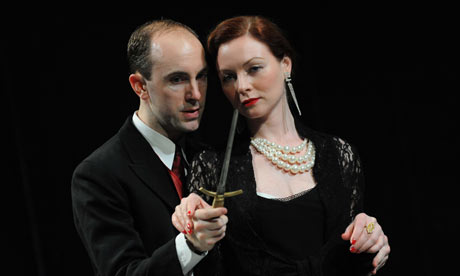
The Duchess
http://static.guim.co.uk/sys-images/Guardian
/Pix/pictures/2010/3/29/1269846980372
/The-Duchess-of-Malfi--001.jpg
     I would have to say that I do agree that it is similar to our modern theater of today's world. Most of our movies today are kind of like The Duchess of Malfi. They are filled with drama, like the play. One great example of drama in today's society is soap operas. These shows are nothing but drama, but they do entertain people. This play was like a soap opera, it was used for entertainment. One example of drama in this play is when Ferdinand busts into the Duchess' chamber. In this scene he seems to be yelling at her about  her having a husband and children. He tells her to kill herself. This takes place in Act 3, Scene 2, pages 38-40.
The Duchess
http://i.telegraph.co.uk/multimedia/archive
/02179/Duchess-of-M_2179908b.jpg
     Another example of the drama in The Duchess of Malfi is in Act 1 when the Duchess marries Antonio. It reminds me of another soap opera, however the name of the soap escapes me. The story was similar in which a man married a woman in secret, and they tried to keep it hidden. They failed just like the Duchess and Antonio. It ruined their image and in fact one of her old lovers tried to murder her husband which just added to the drama.
     The Duchess is a strong woman. She really hasn't done anything wrong, except she lied to her brothers. This shows her character. She is a great woman.

Tuesday, February 19, 2013

2/19/13


     First off, I want to state how difficult reading The Duchess of Malfi is compared to Twelfth Night. I don't exactly know why, but it is more difficult to understand than Twelfth Night. As we know, Twelfth Night was an Elizabethan play, but The Duchess of Malfi is a Jacobean play. These types of plays are similar since both have drama, but the main difference is who was ruling when the play came out(http://www.gcseessays.com/essays643249.htm). An Elizabethan play premiered during Queen Elizabeth I's reign, while the Jacobean plays premiered during King James I's reign. The plays usually have something to do with the politics of the day or the ruling family. It seemed many of the plays during the elizabethan play reign were happier plays than the jacobean play reign.

John Webster
http://www.johnwebster.galeon.com/images/morse11.jpg

     The Duchess of Malfi is a great way help show the meaning behind Sir Thomas Wyatt's two poems. When Antonio and the Duchess marry, they keep it secret otherwise his life would be in danger. It seemed like Bosola is sneaking around in order to get dirt on someone in order to further his own status. It seems as if in order to stay in court, you can trust no one. Even Antonio found it hard to trust Delio with the news of his marriage. It would seem like in the courts of old, that one had to only focus on their own lives and had to try to discredit others.
     When Ferdinand found out about the Duchess having a child, he was angry. He even stated that he wanted to kill the person responsible. This shows just how the power in a court can work. All it would take is for him to say kill this person and guess what would happen. That person would die. This shows that in order to survive in court, one must stay on the good side of the people ranked above them.

Wednesday, February 13, 2013

2/14/13

     Before I begin to talk about the topics for this post, I wanna talk about the play. I must say that when I began to read Twelfth Night, I really had my doubts on whether I would like it. I was completely wrong. It is true that the wordplay was hard at first, but I really did enjoy it. I thought it would just be a boring story, but I was wrong. This play was really good, and I know that I will read it again in the future.
     My reaction to the end of the play would confuse me. This is mainly because the actors are all men. It would take me a while to get used to seeing a man play a woman. Especially the character of Viola, or Cesario. I mean it would be a man playing a woman playing a man. It would be confusing especially knowing what character he was speaking through. The ending would be difficult because I now must see the actor as a woman again since most of the play he was a woman playing a man. My reaction in today's world would be a lot less confusing. The woman would be played by a woman and it would be easier to see the woman as the woman again at the end.
Feste the Fool
http://bloximages.chicago2.vip.town
news.com/host.madison.com
/content/tncms/assets/v3/editorial/0/18/018

d2d58-b968-11e1-9eca-001a4bcf887a/4fdf6080
e236e.preview-620.jpg
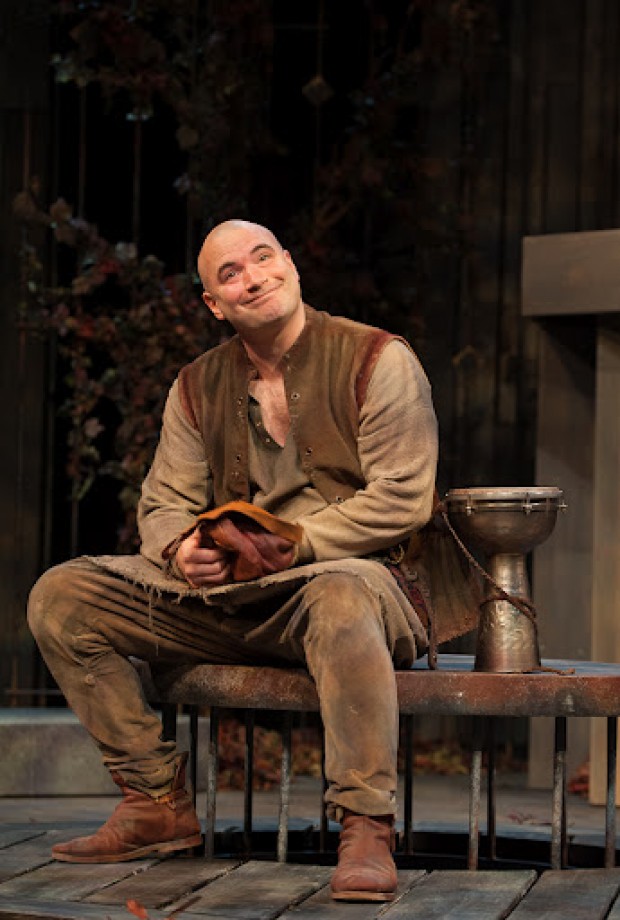
    Now the matter of Feste the Fool. I must say when we first heard of him in the beginning of the play, I believed that he was just a fool, but he is really much more than that. In fact, I believe he always knew that Cesario wasn't as he seemed. "This fellow is wise enough to play the Fool,"(Twelfth Night Act 3, Scene 1, Line 61, Viola). It may not be that, but I feel as if he may have realized that something was "off" about Cesario. Another instance of the wisdom of this fool is when he and Orsino are talking. He actually plays off of Orsino's good nature to give him more money, not many fools would do this. Another instance is when he is talking to Cesario and says, "I am indeed not her Fool but her corrupter of words."(Twelfth Night Act 3, Scene 1, Lines 36-37). Throughout the play the other characters are completely outsmarted by the Fool, this in my opinion proves that he is actually very bright and a lot more than just a fool.

Monday, February 11, 2013

2/12/13

     In the time of Shakespeare, the gender roles were established in which a man as over the woman. A woman's role was mostly that of a house woman. They didn't have any power except if their father or husband had died and they had no other relatives. In Twelfth Night Viola in Act 1 is saved from a ship and has to dress like a man in order to find work in Orsino's court. She wouldn't have been able to work for Orsino unless she dressed like a man. Most of all in this time was that men were believed to be superior to women.
Malvolio
http://www.lasplash.com/uploads//3
/Twelfth_Night_Review-4.jpg
     The appearance of the characters is somewhat hard for me to describe except for Malvolio in one scene because they actually describe what he is wearing. We know that the clothes that he is wearing in this scene makes others believe he is crazy, although most of the people who talk about it planned it. The people of this day made appearance everything, at least those who were the upper class. I believe that Orsino is a well-dressed man since he is a lord. Most of the people in the play are well-dressed for their day, but our look at their dress today would make most of us laugh. If you think about it, appearance for our upper class is still viewed the same. They still put a lot into appearance.
     This play is a love story that has gotten mixed up. All the characters seem to be falling in love with other characters. It is a love story like The Magic Flute, but not the same type of love story. It is hard to believe some of the story considering how fast the characters fall in love, but that is our willingness of belief. Shakespeare wants us to believe that the characters are in love. Even though it is hard for us to believe we must have the willingness to believe it.
     I must say that I have enjoyed the play's first three acts. The wonderful story about how Viola must dress up as a man and try to seduce a woman for a man that she loves, in which the woman she is sent to seduce falls in love with her. I love the drama in the play.

Wednesday, February 6, 2013

2-07-13

http://yearinreading.files.wordpress.com/2011/04/shakes-twelfth-night.jpg
     We are about to begin reading Shakespeare's Twelfth Night. Shakespeare is a great play writer. In Shakespeare's texts he didn't include a lot of stage directions, but yet the actors and directors were still able to act of the scenes. They did this by reading the text, and then adapting the scene to what they believed would be happening. This is why no two Shakespeare plays are the exact same.
     Shakespeare was well educated for his time. He is believed to have attended the King's New School. This school was in Stratford. The school was one of the grammer schools of the time. He left the school to go to London to be part of the theatrical world, but according to the Folger Shakespeare Library it is unknown as to why or when he left to go to London.
William Shakespeare
http://www.biography.com/imported/images/Biography/
Images/Profiles/S/William-Shakespeare-194895-1-402.jpg
     Shakespeare's plays first came around before stage lighting came around. In his time, they used "universal lighting" or the light from the sun. The light they used was the light of the sun because they did not have the lights that we have today. If they had to act as if it was night, it was told through the text or characters. The plays were popular enough that even the commoners were able to attend them. The commoners were allowed to pay a lower price, but had to stand. They were called "groundlings" because they had to stand on the ground in the theater.
     At the beginning of Shakespeare's time, women were unable to be in the plays. If there was a woman in the play, the part was played by a man. In Twelfth Night, there would have been no females playing the female roles. Later on, women were finally allowed to be part of the plays. According to the Folger Shakespeare Library, Shakespeare is buried in Stratford in the chancel of the Holy Trinity Church.

Monday, February 4, 2013

2/05/13

http://teachers.saschina.org/dbister/files/2012/05/Renaissance.jpg
     The Renaissance was another great time period(around 1450-1600) of the early modern world. One of the topics I will discuss is what Castiglione means by the word sprezzatura in The Courtier. According the Castiglione,
     "To do his feates with a slight, as though they were rather naturally in him, than learned with studye: and use a Reckelesness [sprezzatura] to cover art, without minding greatly what he hath in hand, to a mans seeminge."
     At first when I looked at this, I had no clue of what to think about it. It seemed like a bunch of words that were misspelled and just completely thrown together all wrong, but really look at the sentence. It gives you the definition that he was trying to get across. I believe that he makes the word sprezzatura mean that the courtiers must be without many flaws. The must not be too proud. They must not be a quick talker or someone who doesn't know how to hold their tongue. Many men who have loose tongues are reckless, which is the main definitions that he has given.
Bill Gates
http://www.microsoft.com/global/en-us/news/
PublishingImages/bod/billg/gates_print.jpg
     From The Courtier we get a clear look at what they called a "Renaissance man." In my opinion, a "Renaissance man" is a man or woman who is very active in the society, has much knowledge, and has many different skills. I believe that an example of a "Renaissance man" in our time is a man who has helped to make America what it is today, without his contributions the world would be different. This man is Bill Gates. I believe that he is the best candidate for being a "Renaissance man" because of the achievements that he has helped the world achieve. One of the founders of the internet, he has helped program computers and technology into everyone's home and workplace. He is very knowledgeable and I have never heard of him doing anything reckless. This is why I believe he is the best candidate.
                        Sir Thomas Wyatt              
http://www.luminarium.org/renlit/wyattholbein.jpg
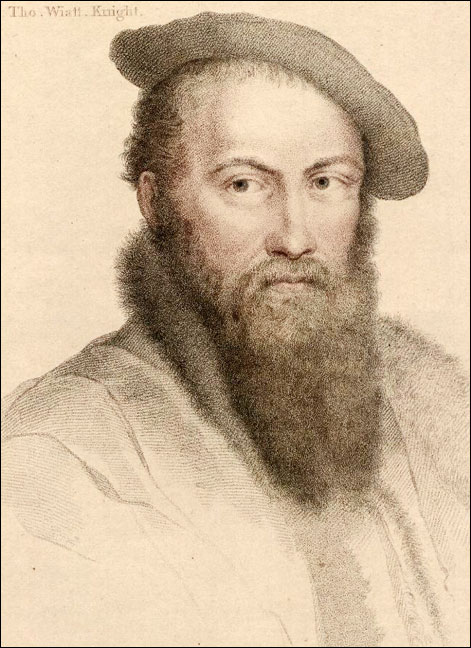
     The second part of this post will be about Sir Thomas Wyatt's two poems. I believe that his poems are both talking about the court of Henry VIII and about the queen, Anne Boleyn. The first poem, Whoso List to Hunt, I Know where is an Hind, talks about his love for her.  How he will never be able to have her because she was the wife of his king, Henry VIII. The second poem, Who list his Wealth and Ease Retain, is talking about how he is in prison watching his love, Boleyn, being put to death by her husband for adultery with, assuming, Wyatt.
     We learn that life in the king's court is a hard life, because one must watch what is said because the king could have you killed for anything. The literal meaning of Noli me tangere means not to touch. In my opinion, he is saying what she probably told him. She was the king's wife and therefore couldn't have relations with Wyatt. In the second poem, he says the line Circa regna tonat over and over. The literal meaning is "it sounds through the realm"(http://sutros.com/songs/15090). I believe that it means something about him hearing the sounds of her execution while in the prison. He cannot escape the sound of her death and it haunts him.